

Art Gallery Lighting
Art Gallery Lighting Guide
Art Gallery Lighting: The Modern Guide to Showcasing Artwork at Its Best
Lighting an art gallery is both a science and an art form. While there are basic guidelines that many galleries have followed for years, the truth is that modern LED track lighting has completely changed what is possible. Today, a perfectly lit gallery is not created by following a single “one metre of wall = one light” type rule — but by understanding how the artwork, the space and the lighting system interact.
A great gallery lighting system must adapt to:
• the type of artwork
• the colours in the work
• the surface and finish
• the ceiling height
• the spacing between pieces
• how often the exhibition changes
• how much control the curator wants
With adjustable track lighting, beam angle options, higher-quality LEDs, and multi-circuit control now available, galleries are no longer limited to one generic setup. Instead, you can create lighting that is tailored, accurate, and flexibly designed for each exhibition.
Below is a simplified but expert framework for planning professional art lighting.
1. The Type of Artwork and Framing

Different artworks behave differently under light.
• Oil paintings benefit from more controlled, narrower beams to avoid glare and hotspots.
• Photographs behind glass require softer beams and careful angles to reduce reflection.
• Illustrations, prints and mixed media often need mid-range beams to balance clarity and depth.
• Textured or layered artwork looks best with a directional beam that reveals surface detail.
The right beam angle alone can transform a piece from “flat” to “alive.”
2. Artwork Colourings and Finish

Colour temperature matters more than people realise.
• Warm whites (2700–3000K) enhance earthy tones, warm palettes and intimate spaces
• Neutral whites (3500–4000K) are ideal for accuracy and balanced colour representation
• High CRI (95+) ensures reds, blues, blacks and neutrals appear exactly as the artist intended
This is why galleries should avoid generic cool-white lighting — it often washes out the subtleties of the artwork.
3. Ceiling Height and Light Positioning

Ceiling height determines:
• how far the beam needs to travel
• which beam angle you should select
• whether you need surface-mounted or suspended track
• whether the light should be angled or tilted more aggressively
High ceilings often benefit from:
• suspended track
• tighter beams
• higher-output fittings
Lower ceilings typically require softer, wider beams.
4. Size and Placement of the Artwork

Artwork hung at variable heights (common in modern and mixed exhibitions) needs adjustable track heads so the beam can be aimed perfectly.
Large-scale pieces require wider coverage and even light distribution.
Small or intricate pieces need tighter control and more focused beams.
This is why fixed downlights never work well for galleries — artwork changes, but downlights do not.
5. Dimming and Control Requirements

Good gallery lighting is not just “on/off.”
Proper dimming allows you to:
• reduce glare
• control atmosphere
• highlight hero pieces
• build lighting contrast
• create separation between collections
For some galleries, a simple dimmable single circuit is enough.
For others that want different lighting moods or zones, a 2-circuit or 3-circuit track system gives flexible group control.
Why Custom Planning Always Produces Better Results

Every gallery is different. Ceiling heights, room layout, artwork type, and overall experience all influence the ideal lighting plan.
A short conversation with an expert — paired with a few photos or basic dimensions — is often enough to design the perfect layout.
We specialise in art gallery lighting and can guide you through:
• beam angle selection
• track type and mounting style
• colour temperature
• number of fittings
• dimming compatibility
• multi-circuit options
• future-proofing for changing exhibitions
A five-minute phone call often solves what could otherwise take weeks of trial and error.
FAQs: Art Gallery Lighting

What is the best lighting for art galleries?
High CRI LED track lighting with adjustable beam angles and warm to neutral colour temperature (2700–4000K) provides the most accurate and flexible lighting for artwork.
How far from the wall should gallery lights be placed?
Track lighting is typically installed 800–1200 mm from the wall. The exact distance depends on ceiling height and the beam angle of the fitting.
What beam angle is best for lighting artwork?
Use narrow beams (10–24°) for focused lighting on small pieces and wider beams (30–60°) for large artworks or wall washes.
Should artwork be lit with warm or cool light?
Warm to neutral light (2700–3500K) is ideal. Extremely cool white can distort artwork colours and reduce visual warmth.
Why is CRI important for art lighting?
A high CRI rating (95+) ensures colours appear accurate and true to the artist’s intention, especially reds and deep hues.
Is track lighting better than fixed downlights for galleries?
Yes. Track lighting is adjustable, aimable, and flexible — perfect for changing exhibitions. Fixed downlights cannot adapt when artwork moves.
How many track lights do I need for a gallery wall?
It depends on ceiling height, artwork size, spacing, and beam angles. A lighting expert can give precise recommendations based on your layout.
Can I dim track lighting in a gallery?
Yes. Modern LED track lights can be dimmed at the wall or via advanced systems like DALI or C-Bus for full exhibition control.
Configuration Options
LED World track lighting is very versatile. Our extensive collection of fittings and accessories can be configured for a wide range of art gallery lighting systems.
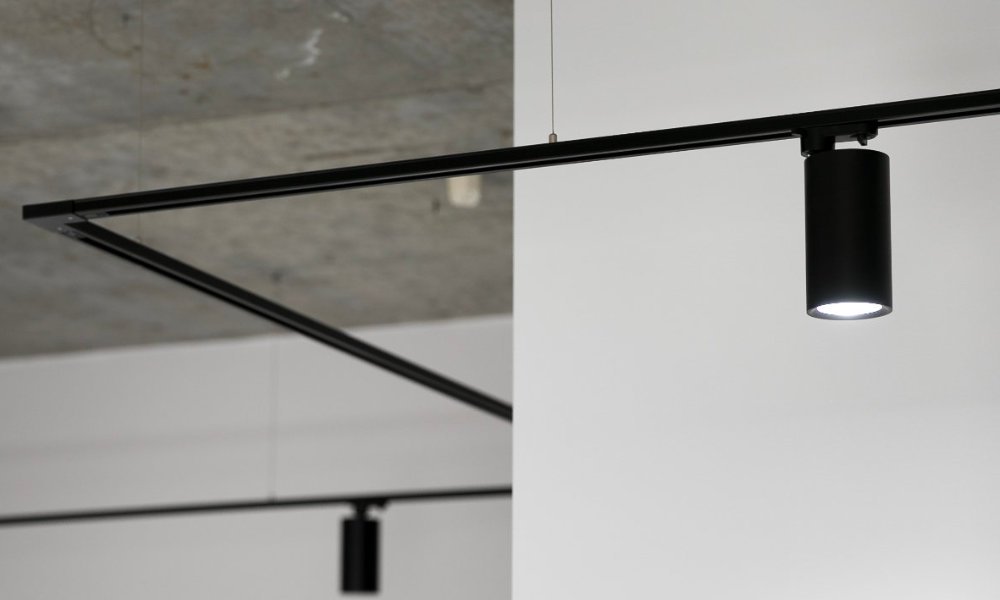


Mounting Methods for Art Gallery Track Lighting
Choosing the right mounting method is just as important as choosing the right lights. The height of your ceiling, the style of the gallery, the type of artwork you’re displaying, and the flexibility you want all influence whether you should use surface-mounted track, suspended track, or a combination of both.
Modern galleries rarely stick to a one-size-fits-all mounting approach. Instead, the goal is to position the track so the beam angle, distance to artwork, and adjustability work together to create clear, even lighting with no glare. Below is a detailed breakdown of each mounting option, how they work, and when to choose one over another.

Surface Mounted Track Lights
Surface-Mounted Track (Most Common and Cleanest Look)
Surface-mounted track is installed directly onto the ceiling, making it the most minimal and streamlined option.
Best for:
- Standard ceiling heights (2.4m – 3.0m)
- Contemporary clean aesthetics
- Permanent gallery exhibitions
- Residential art walls
- Commercial spaces where simplicity matters
- Clean, unobtrusive design
- Easy to install on almost any ceiling material
- Works well with adjustable track heads
- Maintains a tidy architectural appearance
- Lower cost than suspended options

Suspension Mounted Track Lighting
Suspended Track (For High Ceilings & Maximum Control
Suspended track systems hang from the ceiling using suspension wires, allowing you to position the track lower in the room. This dramatically improves performance in spaces with high or vaulted ceilings.
Best for:
- High ceilings (3.0m – 6.0m+)
- Industrial, warehouse, and loft-style galleries
- Spaces where lighting needs to sit closer to the artwork
- Large-format artwork or mixed-height exhibitions
- Temporary exhibitions that change frequently
Advantages
- Allows precise control of track height
- Prevents light spill by reducing throw distance
- Works beautifully with narrow beam angles
- Adds depth and architectural interest to the ceiling
- More flexible for galleries with frequently changing exhibitions
How it performs
By lowering the track closer to the artwork, suspended systems reduce glare, increase accuracy, and allow tighter beam control. This is essential for detailed pieces, glossy surfaces, photography, and large artworks that require more uniform illumination.
Many professional galleries and museums rely on suspended track for this reason — it gives curators complete control over the lighting environment.

Colour Temperature For Art And Gallery Lighting
Colour temperature has a huge impact on how artwork feels and how accurately colours are seen. It is measured in Kelvin and runs from very warm amber light through to clean neutral white and then into colder blue white.
For galleries and art spaces you generally want warm to neutral light with a high CRI so that colours look natural and the room still feels comfortable.
Some of our track lights have an adjustable colour temperature switch on the back of the fitting. This means you can choose the right setting on site for each space and change it later if the gallery or artwork changes.


Cool White
Cool White Cool white is usually in the 4000K to 5000K range. It has a crisp, bright feel and can be useful where you need a very clear working light such as back of house, packing areas, studios or technical spaces. In an art gallery cool white can sometimes make the room feel a bit clinical and can wash out warm tones in paintings and timber. It can work in very contemporary or minimal spaces if that is the look you want but it is not the first choice for most galleries that want a comfortable viewing experience. For artwork the most important thing is not just colour temperature but CRI. A high CRI cool white fitting can still render colour accurately, it will just feel sharper and colder than a warm or neutral white.Warm White
Warm White (99% people choose this) Warm white normally sits around 2700K to 3000K. It has a soft, inviting feel and is commonly used in homes, boutique retail, hospitality and intimate gallery spaces. At these colour temperatures skin tones look good, timber and warmer colours feel rich and the space feels more relaxed. This is why many galleries, private collections and high end retail environments prefer warm white track lighting rather than very cool light. Very warm sources down near 2000K are closer to candlelight and are more about mood than accuracy. They are great for ambience but usually too warm for most artwork if you need true colour. For galleries, 2700K to 3000K is the sweet spot when you want warmth without going too orange.CRI – Colour Rendering Index (The Most Important Factor for Artwork)


Colour Rendering Index (CRI) measures how accurately a light source reveals the true colours of objects compared to natural daylight. It runs from 0 to 100.
• CRI 80 = acceptable for general commercial areas
• CRI 90+ = required for any artwork or premium retail
• CRI 95–97 = museum-grade colour accuracy
Many of your track lights now offer CRI 97, which is elite-level colour rendering. This ensures:
• reds and deep pigments appear rich
• blacks look true, not greenish or grey
• gradients and skin tones look natural
• artwork retains depth and contrast
• metallic and textured surfaces look realistic
• no dullness, distortion or “washed-out” effect
In simple terms:
Low CRI lighting makes artwork look cheap.
High CRI lighting makes artwork look alive.
Anything below CRI 90 should never be used for art galleries.
CRI 97 is the new standard for premium collections and exhibitions.
Dimming Options for Art Gallery Lighting
Dimming is one of the most powerful tools a gallery can use to shape mood, guide attention, and bring out the true character of each artwork. Artwork never behaves the same under identical lighting. Different pigments, textures, finishes and materials all reflect and absorb light differently — which is why having flexible, reliable dimming matters so much in gallery environments.
But dimming doesn’t need to be complicated.
In fact, most galleries are not multi-storey buildings with huge automation systems. They just need simple, reliable control that makes the artwork look perfect without introducing unnecessary complexity or expensive programming.
Below are the dimming methods we recommend, in the correct order for real-world gallery use.
1. Wall Dimming (Most Recommended & Most Practical)
Wall dimming is by far the most common — and the most appropriate — dimming method for galleries of all sizes.
Why galleries prefer it:
• No apps, no programming, no network configuration
• Anyone can adjust the dimming — curators, staff, exhibitors
• Smooth, consistent dimming for the whole circuit
• Zero maintenance or technical headaches
• Works perfectly with our phase-dimmable 30W Zoom light
Wall dimming also allows you to build atmosphere:
• brighter levels during the day
• softer levels at night
• spotlighting hero pieces
• separating exhibitions by mood
• creating flow and depth throughout the space
And when paired with multi-circuit track (link to multi-circuit page), wall dimming becomes even more powerful:
• Circuit 1 = ambient
• Circuit 2 = artwork
• Circuit 3 = feature pieces
This gives you scene control WITHOUT needing automation systems.
Most galleries do not need WiFi apps, DALI, C-Bus or anything overly technical. A clean wall dimmer with multi-circuit capability takes care of 99% of use cases with less cost, less maintenance and better long-term reliability.
2. On-Board Dimming (Individual Artwork Control)
Some of our fittings come with a small dimming dial directly on the light head. This is called on-board dimming, and it gives you hyper-precise control over each artwork.
This is incredibly powerful because:
• Every artwork responds differently to light
• Some mediums are matte, some glossy
• Some absorb light, others bounce it
• Some require soft wash light, others need tight punchy contrast
• Sculptures and 3D textures often need less brightness than canvas work
On-board dimming allows you to “tune” each artwork the same way a photographer adjusts exposure.
This creates:
• deeper contrast
• more defined shadows
• more colour depth
• correct viewing comfort
• perfect balance between pieces of different sizes or finishes
When combined with adjustable beam angles, adjustable colour temperature, and CRI 97 LEDs, you get total lighting control:
• Aim the beam
• Adjust the spread
• Select the colour temperature
• Tune the brightness
This level of control is extremely valuable in rotating exhibitions, mixed collections and high-end galleries.
On-board dimming is also faster than using a wall dimmer when you just need to adjust a few selected pieces rather than the entire room.
3. WiFi Dimming (Useful Only for Large Multi-Zone Buildings)
WiFi or app-based dimming has become popular because it sounds modern — but in real gallery environments, it is rarely needed.
We supply WiFi-compatible systems when required, but we do not recommend it for most spaces because:
• It adds unnecessary complexity
• It depends on network reliability
• Staff need training to use the app
• Over time, networks change and systems break
• It is slower to adjust than a physical dimmer
• Not suited to small–medium galleries
WiFi dimming is only useful when:
• you have a very large building
• you have lighting spread across multiple floors
• you need timed scenes for public events
• you have dozens of circuits across a big campus
Most galleries are not in this category.
This is why we generally guide clients toward wall dimming + on-board dimming for the best blend of control and simplicity.
What About DALI & C-Bus?
DALI, C-Bus and fully centralised automation systems were common from around the 1980s to early 2010s, especially in national galleries and government buildings.
Today, they are:
• expensive
• over-engineered
• complicated to program
• slow to update
• unnecessary for most galleries
• costly to maintain
We can supply fittings compatible with these systems, but we don’t recommend using them unless you already have a legacy commercial setup and simply need replacement fittings.
Modern galleries prefer:
• phase-dim wall control
• multi-circuit track
• on-board dimming
• or a simple WiFi system (only if required)
Summary: What We Recommend for Most Galleries
✔ Primary method: Wall dimming
(especially with our phase-dimmable Zoom Light)
✔ Secondary method: On-board dimming
(for individual artwork control + layered lighting)
✔ Optional: WiFi
(only for large buildings where wall dimming is not practical)
✔ Not recommended: DALI / C-Bus
(legacy systems – expensive, outdated, unnecessary)
This structure delivers the perfect balance of:
• simplicity
• precision
• flexibility
• long-term reliability
• total artwork control
Products
Why Lighting Design Matters in Art Galleries

The lighting design of an art gallery has a direct impact on how people experience the artwork. The right lighting reveals colour, depth and texture. The wrong lighting can flatten it, distort tones, or make the work feel dull. This is why professional art lighting is never an afterthought — it is part of the curation itself.
At LED World, we specialise in modern, adjustable LED track lighting designed specifically for artwork. Our fittings offer precision control over beam angle, colour temperature and brightness, allowing you to shape the viewer experience exactly as intended. Every gallery is different, and every artwork behaves differently under light, so our goal is to help you build a system that is flexible, accurate and future-proof.
What Makes Gallery Lighting Different?
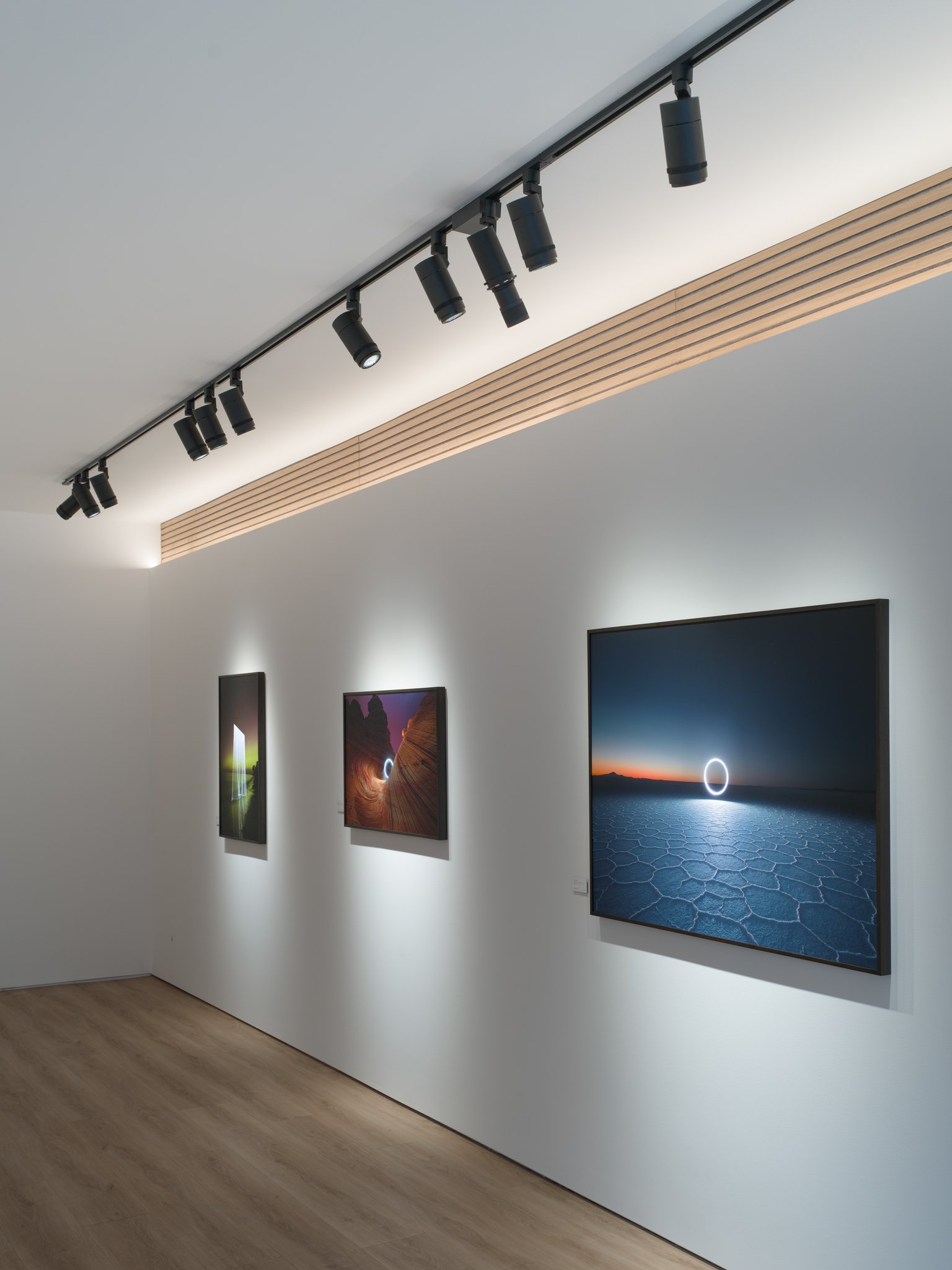
Selecting lighting for artwork involves far more than choosing a bright spotlight. You must consider:
• the artwork medium
• surface finish (matte, glossy, textured, glass)
• colour palette and contrast
• size and placement
• ceiling height and mounting method
• desired mood and ambience
• level of adjustability needed
• how often exhibitions change
And above all, you need high CRI lighting so colours appear true and lifelike. Many of our fittings now offer CRI 97, which is museum-grade accuracy.
With adjustable track lighting, you can control:
• direction
• beam spread
• colour temperature
• dimming
• layering
• individual artwork tuning
• multi-circuit grouping
This flexibility is why galleries around the world are moving away from fixed downlights and toward adjustable track systems.
Our Art Gallery Lighting Ranges
We offer four dedicated product families for lighting artwork. Each provides a different level of control, performance and visual output. Below is a quick overview with internal linking opportunities for your site.
1. Zoom Range

Our Zoom range is the most flexible and widely used option for galleries and private collections. It features:
• variable beam angle – narrow spot to wide flood
• phase-dimmable at the wall
• CRI 97 for true colour accuracy
• adjustable tilt + rotation
• optional adjustable colour temperature switch on the fitting
This is the perfect “do-everything” spotlight for exhibitions that change frequently. One light can go from highlighting a small print to washing a large canvas with a single twist of the lens.
2. Multi Range

Our Multi range is designed for galleries that want full control over lighting scenes and zones. It allows you to use 2-circuit or 3-circuit track, grouping lights into separate dimming channels.
For example:
• Circuit 1 – general ambience
• Circuit 2 – artwork lighting
• Circuit 3 – feature pieces or sculptures
Pairing multi-circuit track with dimmable Zoom or Deluxe heads gives curators maximum flexibility without needing complicated systems like DALI or automation networks.
3. Deluxe Range

Our Deluxe range provides a premium architectural look with high-performance optics. It is ideal for galleries wanting a more refined aesthetic or a higher-end finish.
Features include:
• crisp, controlled beam profiles
• high CRI LEDs for vivid colour reproduction
• precise glare control
• clean modern housing in Black or White
Deluxe is commonly used in boutique galleries, private collections, minimalist spaces and high-end retail environments where lighting must be discreet yet powerful.
4. Medium Wash Range
(Link to Medium Wash Product Page)
Our Medium Wash fittings are designed to evenly illuminate larger surfaces and groupings of artworks. They provide a smooth, soft wash without harsh hotspots, making them ideal for:
• long gallery walls
• series or grids of artwork
• larger pieces needing even coverage
• background ambient layers
They can be mixed with spotlights (Zoom or Deluxe) to create depth and hierarchy within the space.
Why Galleries Choose LED World

• CRI 97 colour accuracy
• adjustable beam angles
• adjustable colour temperature on selected models
• on-board dimming for individual artworks
• wall dimming for whole-room mood control
• multi-circuit options for scene shaping
• surface mount & suspended track options
• long lifespan + low maintenance
• architectural finishes in Black and White
Above all, our systems are designed for flexibility. Galleries change. Exhibitions rotate. Artwork moves. Your lighting should adapt effortlessly with it.
We’re here to help design the perfect layout for your space — from choosing the right heads, to deciding between surface or suspended track, to beam angles, dimming and colour temperature selection.


Projects

Boom Art Gallery
Located in Geelong, Boom Gallery occupies a beautifully restored wool-mill building with high ceilings, textured surfaces and a constantly rotating exhibition schedule. We worked closely with the owners to understand their lighting requirements, assess the space and design a solution that would give them flexibility while maintaining true colour accuracy.
For this project we supplied a combination of our Gallery Wall Wash System and L’Art II series. Because colour accuracy is critical in a gallery environment, all fittings were specified with CRI 97 LED modules to ensure the artworks’ colours, textures and details are presented exactly as intended.
The result is a clean, balanced lighting system that adapts well to changing exhibitions while maintaining the integrity and vibrancy of the artwork on display.

Craig Parry Gallery
Craig Parry is a renowned marine and environmental photographer, celebrated internationally for his evocative seascapes and ocean-life imagery. His work has garnered acclaim across major publications and exhibitions. Among his accolades, Craig has collaborated with the legendary Hemsworth Brothers and earned “Photo of the Year” multiple times — a testament to his vision, skill, and deep commitment to natural environments.
His small boutique gallery in Byron Bay, Australia, attracts serious collectors, art lovers and critics alike. When Craig approached us to design the lighting system for his space, we knew we needed to deliver something worthy of his reputation.
We worked directly with Craig and his electrician to understand his needs: to preserve the mood of his ocean photography, reduce glare off glass-mounted prints, and ensure colour fidelity so that subtle blues, greens, and natural tones remain true under light.
Together we specified a combination of our Gallery Wall Wash system and premium L’Art II fittings. Because many of Craig’s works are framed under glass, glare reduction and precise beam control were critical. The result is a gallery layout that highlights each photograph with depth and clarity — without reflections interfering with the viewer’s experience.
Thanks to clear communication between all stakeholders — Craig, his electrician, and our design team — the installation was seamless. The gallery now offers an inviting, professional environment that truly showcases the power and emotion of Craig Parry’s award-winning photography.

Scott Leggo Gallery
Scott Leggo is one of Australia’s leading landscape photographers, based in Canberra and known for capturing dramatic, expansive scenes from across the country. His work blends a deep passion for travel with an expert eye for composition, resulting in prints that are collected both locally and internationally. His gallery presents a mixture of large-format canvases and framed fine-art prints, each requiring precise and controlled lighting to preserve colour accuracy and visual impact.
For this project, we supplied and specified our 15W LED Wall Wash track light series, chosen for its ability to provide smooth, even illumination across wide artworks. Each fitting features an adjustable beam angle lens, allowing the light spread to be shaped to the exact size of each piece. The lights were supplied with high-CRI LED modules to ensure faithful colour reproduction — essential for landscape photography where subtle tones, gradients and natural colours must remain true. Anti-glare optics were also integrated to maintain viewer comfort and eliminate reflections across framed works.
The result is a clean, immersive gallery environment that showcases Scott Leggo’s landscapes with depth, clarity and accuracy.

One Space Gallery
One Space Gallery in Brisbane hosts a constantly rotating exhibition schedule, which means the lighting must adapt quickly to different artwork sizes, styles and layouts. When they approached us, they were initially considering ERCO, a well-known premium brand. After reviewing their needs, we were able to demonstrate that our L’Art range offered the same level of performance and flexibility at a far more cost-effective price point — without compromising quality.
The key requirement was instant beam-angle adjustment. With the L’Art fittings, the gallery team can shift from a tight, focused spotlight to a wide, even wash in just seconds. This allows them to create layers of light, highlight feature works, or soften illumination depending on the exhibition. No tools, no lens changes, no delays — just seamless control.
The result is a lighting system that perfectly supports their dynamic exhibition schedule. And importantly, the fittings have now been installed for over eight years, continuing to perform reliably with consistent colour accuracy and minimal maintenance. This long-term stability is one of the reasons the L’Art range remains a trusted solution for galleries looking for high-end lighting that is flexible, durable and future-proof.

Studio Gallery Melbourne
This former plastics factory was transformed into a striking contemporary gallery with expansive concrete floors, high ceilings and large open wall surfaces. Because of the scale and height of the building, lighting design played a crucial role in shaping how visitors experience the space.
To achieve consistent, high-quality illumination, we installed a 94-metre suspended track system, positioned three metres above floor level. This allowed the track to sit at the optimal height for even light distribution while maintaining the industrial aesthetic of the converted factory space.
The track was set one metre out from the artwork to create a clean, uniform wall-wash effect — ensuring that large canvases, mixed-media pieces and sculptural works were all lit evenly from edge to edge. We specified 3000K warm white for a welcoming gallery ambience and used high-CRI LED modules to ensure the colours, textures and fine details of each artwork were displayed exactly as intended.
Since the successful launch of this project, the gallery has expanded significantly, opening two additional spaces in Melbourne and a major flagship in Sydney. Their continued growth is a testament to both the strength of the brand and the importance of high-quality, adaptable lighting in shaping the identity and experience of each location.
Additional Guides for Curators, Designers & Collectors
Art Galleries: The complete Proffesional Guide
Track lighting is the preferred system for art galleries thanks to its flexibility, precision beam control, and ability to highlight artworks without glare or UV damage. This guide explains mounting distances, beam angles, CCT selection, and how to professionally light paintings and sculptures with museum-grade accuracy.
Art Gallery Lighting Design
The Complete Guide to Showcasing Artwork at Its Absolute Best
This article covers the fundamentals of professional gallery lighting design, from balanced ambient light to focused accent lighting. It explains how to shape mood, guide visitor attention, and present each artwork with depth, clarity, and visual precision.
Art Gallery Lighting Systems
Modern art gallery lighting systems are designed to provide precise control, professional colour accuracy, and flexibility for rotating exhibitions. This guide explains how track systems, beam angles, colour temperature, CRI, and mounting options work together to illuminate artworks clearly and consistently while preserving the artist’s intended visual impact.
Simon Mundine
LED World Director


